7UP’s Brand Refresh: Why Legacy Brands Should Reinterpret, Not Reinvent
7UP is changing its recipe, logo, packaging, and positioning. At first glance, it might look like another beverage brand refresh. But beneath the surface is a valuable lesson for any established brand trying to stay relevant in a changing marketplace.
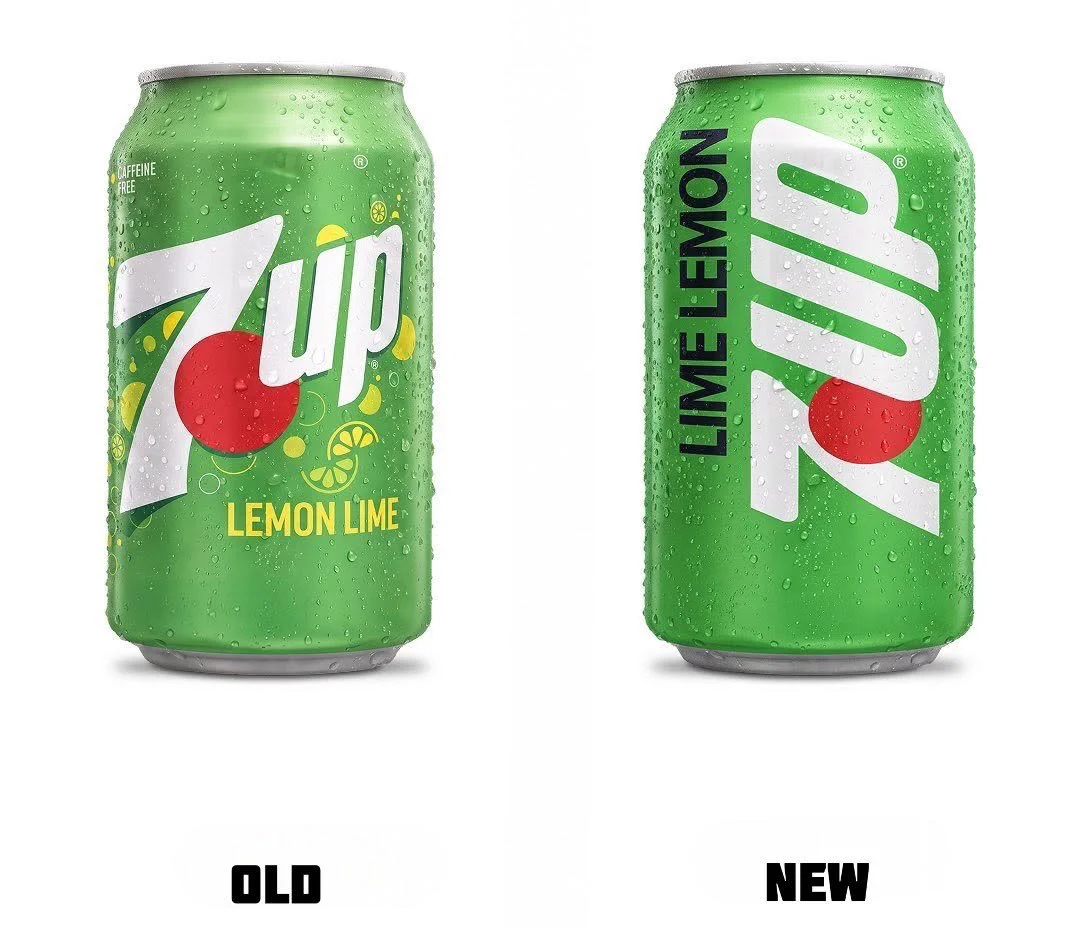
The biggest change is surprisingly simple: 7UP is moving from “lemon-lime” to “lime-lemon.” The new recipe puts more emphasis on lime, giving the product a more pronounced citrus profile.
The change is accompanied by updated packaging, a refreshed visual identity, and a marketing campaign designed to reconnect the nearly century-old brand with today's consumers. But the real strategy isn't about changing a soda, it’s about giving an established brand a new reason to matter.
The Challenge Facing Legacy Brands
7UP already has something many newer brands would love to have: massive awareness and decades of brand recognition. The problem is that awareness does not automatically create relevance.
Consumers have more choices than ever, particularly in the crowded carbonated soft drink category. 7UP competes with major brands such as Sprite and Starry, making differentiation increasingly important.
The answer isn't necessarily to create an entirely new identity. Instead, 7UP is looking at what already makes the brand distinctive and amplifying it.
That’s smart brand strategy.
Don't Throw Away Brand Equity
One of the biggest mistakes established brands can make is assuming that modernization requires starting over. It doesn't.
Legacy brands have valuable assets built over decades: recognition, nostalgia, associations, visual cues, customer memories, and emotional connections.
Throwing those assets away can create a new brand, but it can also eliminate the very things that made the original brand valuable. 7UP is taking a different approach.
The brand is retaining its core identity while changing the emphasis. The flavor becomes more lime-forward. The visual identity becomes more contemporary. The messaging leans into the brand's unconventional personality.
The goal isn’t to become something completely different, it’s to make what 7UP already is feel relevant again.
Relevance Over Reinvention
This is an important distinction for marketers.
When a mature brand experiences declining engagement or cultural relevance, the instinct may be to pursue a complete rebrand.
But before doing that, marketers should ask three questions:
What do customers already recognize?
What do they already value?
How can we reinterpret those strengths for today's audience?
Those questions can reveal opportunities that don't require abandoning decades of accumulated brand equity.
7UP's strategy essentially follows that principle. Product, packaging, positioning, and marketing are all moving in the same direction.
That creates a much stronger transformation than simply changing a logo.
The Bigger Marketing Lesson
The 7UP refresh demonstrates a powerful principle: Modernization doesn't have to mean reinvention.
The strongest legacy-brand transformations often happen when companies identify the equity that still matters, eliminate what feels outdated, and amplify what has the potential to become relevant again.
7UP isn't trying to erase its history, it's using its history as a foundation for its next chapter.
For marketers working with established brands, that's the takeaway worth remembering.
Don't throw away brand equity. Reinterpret it.
Because sometimes the best way to move a brand forward isn't to become something new, it's to make what people already know and love matter again.