The way customers discover businesses is changing, and OpenAI is taking another step toward making ChatGPT an important part of that process.
On November 10, 2026, OpenAI introduced Business Profiles in ChatGPT, giving eligible businesses new ways to manage their presence, measure visibility, and connect with potential customers through AI-powered conversations.
This development represents more than another business directory or online listing. It signals a shift in how companies can establish their presence within AI platforms and influence how customers discover their products and services.
For business owners, marketing professionals, and local service companies, this is something worth paying attention to.
What Are ChatGPT Business Profiles?
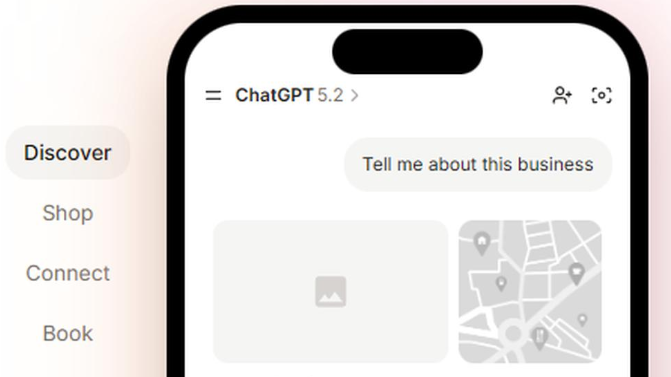
ChatGPT Business Profiles give businesses an opportunity to establish and manage their presence directly within the ChatGPT ecosystem.
Through OpenAI's Business Hub, eligible businesses can claim and verify their profiles, manage important business information, and provide customers with additional details about their offerings.
Think of it as another digital touchpoint where customers can learn about your company while researching products, comparing services, and looking for recommendations.
Some of the capabilities include:
Claiming and verifying a business profile.
Managing business descriptions and information.
Adding relevant website links.
Providing product and service information.
Uploading product feeds with pricing and availability.
Receiving a verified business indicator.
For companies that depend on online discovery, this creates another opportunity to ensure their brand information is accurate, accessible, and useful to potential customers.
1. AI Visibility Is Becoming Measurable
One of the most interesting developments is the introduction of business analytics.
For years, businesses have relied on traditional marketing metrics to evaluate their online visibility. Google Search Console measures search impressions and clicks. Google Analytics tracks website traffic and visitor behavior. Google Business Profile provides insights into how customers interact with local listings.
AI search has presented a different challenge.
Businesses could see their brands mentioned in ChatGPT responses, but measuring how frequently those mentions occurred was difficult.
OpenAI's new analytics capabilities begin addressing that problem.
Businesses will have access to aggregated performance information, including:
Business mentions within ChatGPT.
Business profile views.
Website clicks originating from ChatGPT.
Discovery topics associated with conversations where their websites are cited.
This creates an opportunity to better understand how customers discover brands through AI-powered search.
It also reinforces an important marketing distinction: visibility and website traffic are not the same thing.
A business might appear in dozens of AI-generated recommendations without receiving a corresponding increase in website visits.
Understanding both metrics will become increasingly important when evaluating marketing performance.
2. Business Agents Create New Customer Engagement Opportunities
Another significant development is the introduction of Business Agents.
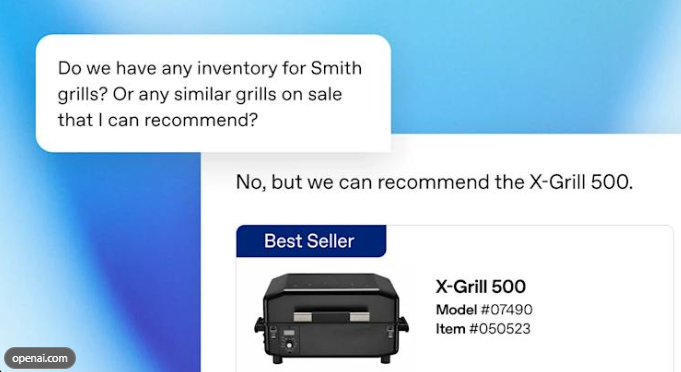
Eligible businesses can create AI-powered agents that help customers explore products and services, ask questions, compare options, and make purchasing decisions.
Instead of relying exclusively on a traditional website experience, businesses may have another way to interact with potential customers directly within ChatGPT.
Imagine someone asking ChatGPT to compare three companies offering a particular service.
A Business Agent could help answer questions about available services, explain product offerings, and guide customers through their options.
For ecommerce businesses and online service providers, this could create a new customer acquisition and conversion channel.
It also introduces another consideration for marketers: the customer journey may increasingly happen inside AI platforms rather than exclusively on a company's website.
3. Local SEO Is Expanding Beyond Google
For local businesses, this development deserves particular attention.
Google Business Profile has traditionally been one of the most important tools for managing local business visibility.
Businesses invest considerable time improving their listings, collecting customer reviews, maintaining accurate contact information, and strengthening their local search presence.
Now, ChatGPT is creating another environment where business information and brand visibility matter.
This doesn't mean Google Business Profile is becoming less important. It means businesses need to think more broadly about their digital presence.
Accurate business information, consistent service descriptions, relevant website content, and authoritative third-party mentions all contribute to a stronger digital footprint.
Local businesses should begin thinking about how their information appears across the platforms customers use to research and evaluate service providers.
AI visibility is becoming another component of a comprehensive local marketing strategy.
4. Brand Authority Matters More Than Ever
Getting mentioned in an AI-generated response is not simply about having a website.
AI platforms use information from multiple sources to understand businesses, evaluate relevance, and generate responses.
That makes brand authority an increasingly important consideration.
Businesses should focus on building a digital presence that clearly communicates:
What the company does.
Which products and services it provides.
Where it operates.
Who it serves.
Why customers should trust it.
What differentiates it from competitors.
This information should be supported by useful website content, customer reviews, industry references, and consistent business information across trusted platforms.
The goal isn't simply to publish more content. It's to establish a recognizable, authoritative brand that AI systems can understand and accurately reference.
5. What Businesses Should Do Now
Although AI search is still evolving, businesses don't need to wait for every feature to become available before preparing.
Here are five practical steps to take now:
1. Review your digital business information. Make sure your company name, address, phone number, website, services, and business descriptions are accurate and consistent.
2. Strengthen your website content. Create useful service pages, product descriptions, FAQs, and educational resources that answer the questions customers actually ask.
3. Build brand authority. Develop a stronger presence across relevant industry publications, reputable directories, customer review platforms, and other trusted websites.
4. Improve your product and service information. Make it easy for customers and AI platforms to understand exactly what you offer, who you serve, and where you operate.
5. Monitor AI visibility. Pay attention to brand mentions, AI-generated recommendations, referral traffic, and emerging analytics tools that help measure performance.
The Future of Business Discovery Is Changing
ChatGPT Business Profiles represent another step toward integrating business discovery, marketing analytics, and customer engagement into AI-powered platforms.
For marketers, this creates an entirely new area of opportunity.
Traditional SEO focused heavily on improving rankings, generating impressions, and earning website clicks. Those fundamentals still matter, but businesses must now consider how they appear within AI-generated answers and recommendations.
The next evolution of digital marketing isn't just about getting your website found.
It's about making sure your business is understood, recognized, recommended, and trusted wherever customers are searching for answers.
AI visibility is becoming a marketing priority. Businesses that start preparing now will be better positioned as these platforms continue to evolve.